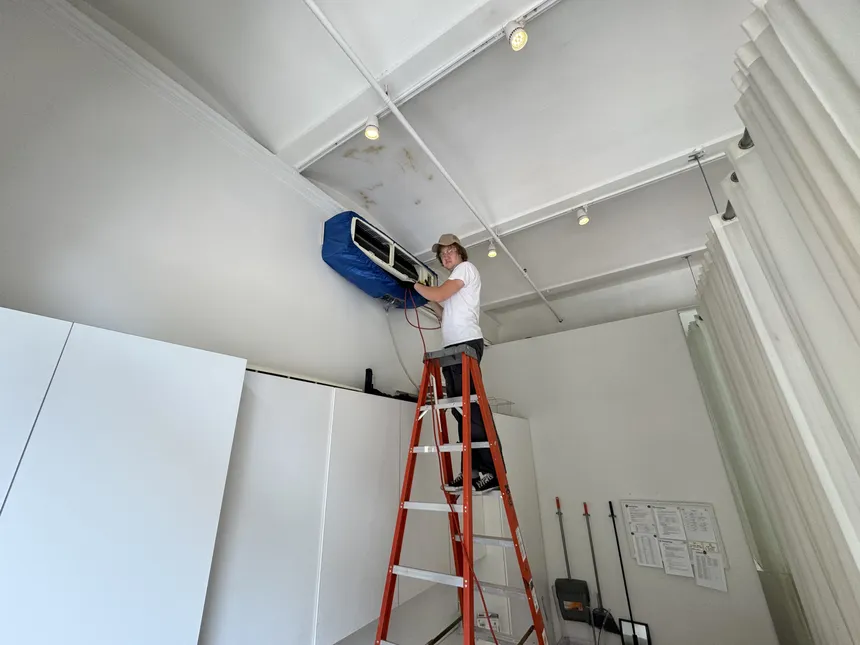
Why is one ductless head on standby when another room is cooling?
Two indoor heads can have different temperature settings without being able to heat and cool simultaneously. In many residential multi-split systems the heads share one operating mode at the outdoor unit. A head asking for the opposite mode may wait on standby. Other system designs can work differently.
Match the heads to the outdoor unit
Use the apartment’s equipment schedule or installer’s diagram. List the requested mode for each connected head, including an unoccupied bedroom set to Auto. A temperature number alone is insufficient: 72°F in Heat and 72°F in Cool are different requests. Check whether a building controller has priority before changing shared settings.
In the Mitsubishi MSZ-GL service reference, the multi-system section describes standby when an indoor unit requests an incompatible mode. For your own equipment, use the table for the actual model. If everyone agrees and normal user controls allow it, select a consistent mode and observe what each head does after its normal startup delay.
Escalate a fault that survives the comparison
If one head still fails with compatible requests, record its indicator sequence and which heads continue working. Supply the indoor and outdoor model numbers to ductless service. That evidence helps distinguish a shared operating constraint from an individual equipment fault.