Why Is My Rooftop AC Unit Leaking Water?
A New Yorker’s Guide to Solving the Drip
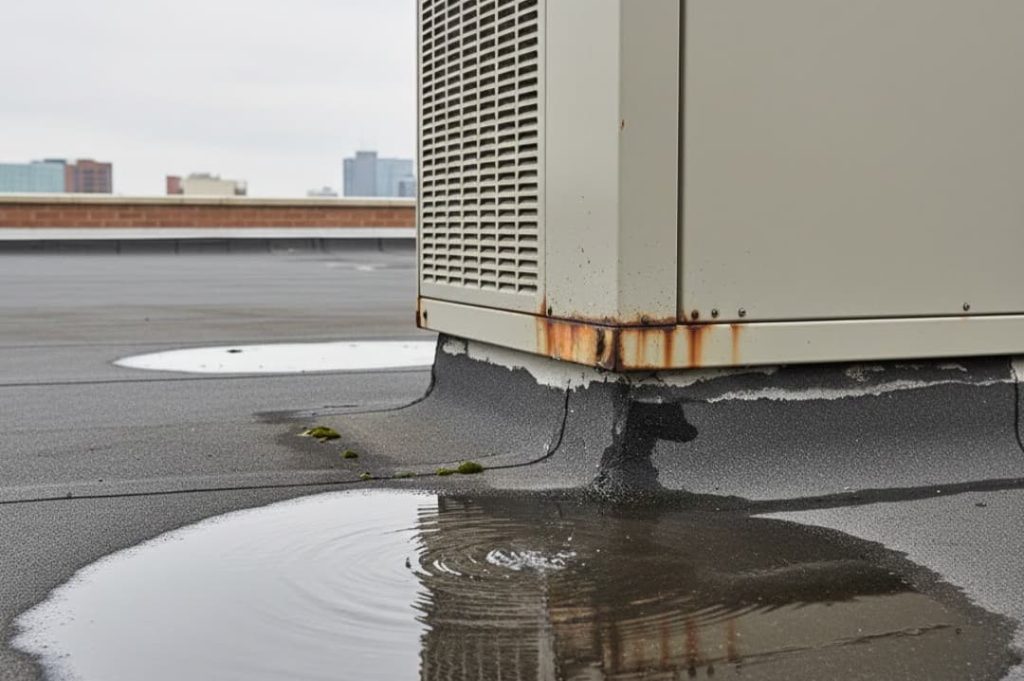
There’s nothing quite like the panic of discovering a puddle beneath your rooftop air conditioning unit on a sweltering New York summer day. You’re wondering if you should shut the whole system down, call in reinforcements, or simply ignore it and hope for the best. Spoiler alert: ignoring it isn’t the move. Let’s dive into why your AC is staging its own miniature waterfall and, more importantly, how to make it stop.
Why Is My Rooftop AC Leaking Water?
Your rooftop AC unit leaking water isn’t just annoying—it’s your system’s way of crying for help. The most common culprit is a clogged condensate drain line, which is essentially your AC’s plumbing system. When warm, humid New York air passes over your unit’s cold evaporator coils, condensation forms (think of a cold glass of iced coffee on a humid day). This moisture should drain away smoothly through a designated pipe, but when that pipe gets blocked with algae, dust, or debris, water backs up and finds creative escape routes—usually onto your roof or, worse, into your ceiling.
Other potential troublemakers include:
- Low refrigerant levels: This causes coils to freeze, then melt dramatically when the system cycles off
- Dirty air filters: Restricted airflow can freeze coils, leading to eventual flooding
- Damaged drain pans: Rust or cracks allow water to escape where it shouldn’t
- Improper installation: If your unit isn’t level, water pools instead of draining
According to HVAC experts, New York’s humidity levels make condensate drain issues particularly common during peak summer months.
Is Water Dripping from AC Dangerous?
Short answer? It can be. While a small amount of condensation draining properly is normal, uncontrolled leaking poses several risks. Water damage to your ceiling, walls, or insulation can cost thousands to repair—and that’s before we talk about potential mold growth. Mold thrives in damp conditions, and once it takes hold in your home’s structure, you’re looking at both health hazards and significant remediation expenses.
Plus, water and electrical components make terrible roommates. If water reaches your unit’s electrical parts or wiring, you’re risking short circuits, system damage, or even fire hazards.
How Do I Unclog My AC Condensate Drain Line?
Ready to channel your inner handyman? Unclogging your condensate drain line is surprisingly manageable for a DIY project:
1. Locate the drain line: Usually a PVC pipe near your indoor air handler or outdoor unit
2. Turn off your AC: Safety first—shut down the system completely
3. Clear visible debris: Remove any obvious blockages from the drain opening
4. Use a wet/dry vacuum: Attach it to the drain line’s end and run for 2-3 minutes
5. Flush with distilled vinegar: Pour one cup through the line to kill algae and bacteria
6. Rinse with water: Follow up with clean water to flush everything through
For stubborn clogs, HVAC professionals recommend using a drain snake or calling a professional technician.
How Can I Get My AC to Stop Leaking Water?
Prevention beats repair every time. Here’s your maintenance playbook:
- Replace air filters monthly during heavy-use months (June through September in NY)
- Schedule annual professional maintenance: Ideally before cooling season begins
- Install a condensate drain pan tablet: These prevent algae growth for 3-6 months
- Check for proper leveling: Your unit should sit with a slight tilt toward the drain
- Inspect insulation: Ensure drain lines are properly insulated to prevent freezing
Can I Still Run My AC If It’s Leaking Water?
Technically? Yes. Advisable? Not really. Running a leaking AC is like driving with a flat tire—you might get somewhere, but you’re causing progressive damage. Minor leaks can quickly escalate into major problems, and you’re potentially damaging your home while straining your system.
If you notice leaking, your best move is shutting down the unit and addressing the issue. According to Energy Star guidelines, a well-maintained AC runs more efficiently anyway, saving you money on those brutal New York summer electric bills.
However, if you’re in the middle of a heatwave and need immediate relief, you can temporarily run the system while monitoring the leak—just place a catch pan underneath and check hourly. But seriously, get it fixed ASAP.
When to Call a Professional
Some situations demand expert intervention:
- Leaks persist after cleaning the drain line
- You notice frozen coils repeatedly
- Water damage is already visible on ceilings or walls
- Your system is over 10 years old and showing multiple issues
- You’re uncomfortable working with electrical equipment
The Bottom Line
Your rooftop AC leaking water is usually a fixable problem, not a crisis—but only if you address it promptly. Most leaks stem from clogged condensate drains, which you can often clear yourself with basic tools and some weekend warrior spirit. However, persistent issues, visible damage, or anything involving refrigerant levels deserves professional attention.
New York’s climate means your AC works overtime from May through September, so show it some love with regular maintenance. Your future self (and your wallet) will thank you when you’re enjoying perfectly chilled air without the soundtrack of dripping water.
Got questions? Don’t wait until that small drip becomes a ceiling waterfall. Schedule a maintenance check or grab your wet/dry vac—your cool, dry home awaits.