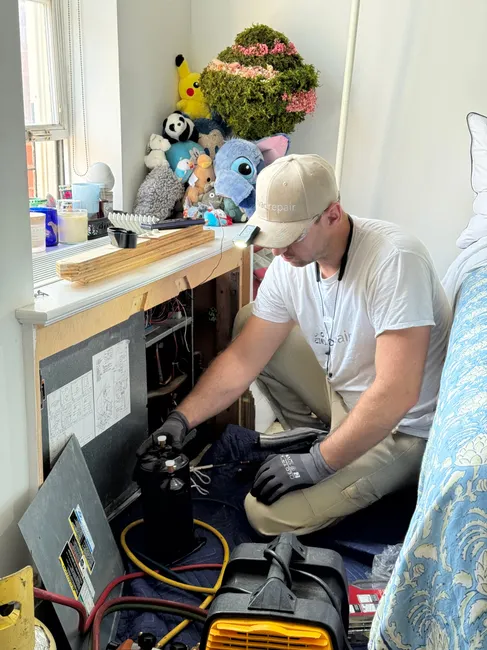
Is the PTAC rattling, or is the wall transmitting noise?
An apartment wall can carry sound a surprising distance. A rattle heard beside a PTAC may start at its room-side cover, inside the operating equipment, or at another source connected to the structure. A recording that captures the transition into the noise is more informative than a loud clip with no operating context.
Compare ordinary modes
From the room, note whether the noise is present with the unit off, with fan only, or only when heating or cooling is active. Record whether it follows fan speed. Identify the loudest location: room-side cover, surrounding wall, floor or window frame. Avoid pressing on the housing while recording, removing the cover or touching the exterior grille. That changes the condition and may expose moving parts.
Use the pattern to scope the visit
A speed-related vibration points the inspection toward moving components and their mounting. A noise that continues with the local unit off deserves a building-side check, especially if neighboring equipment operates nearby. Startup or operating sounds listed in the GE Zoneline manual are model-specific; a new severe vibration deserves inspection even when cooling continues.
For PTAC repair, give the technician the model, mode sequence and whether the behavior began after a chassis or façade change. Ask them to confirm the source before quoting a motor or replacing the sleeve.