Do Mini Splits Dehumidify? Understanding Moisture Control in Ductless HVAC Systems
Indoor humidity management directly impacts comfort, health, and property preservation. Many property owners invest in ductless HVAC systems without understanding their full capabilities, particularly regarding moisture removal. This knowledge gap often leads to unnecessary equipment purchases or persistent humidity issues that could be addressed through proper system operation.
Excess indoor moisture creates conditions favorable to mold growth, dust mite proliferation, and structural damage. The Environmental Protection Agency recommends maintaining indoor relative humidity between 30% and 50% to minimize these risks. Yet countless homeowners operate mini split systems daily without recognizing their built-in dehumidification capabilities.
The question “do mini splits dehumidify” appears frequently in homeowner forums and HVAC discussions. The straightforward answer is yes—mini split systems remove moisture from indoor air during normal cooling operation. However, the effectiveness varies significantly based on system design, operating mode, and environmental conditions.
Consequences of Uncontrolled Indoor Humidity
Failing to address humidity issues carries measurable costs. Excess moisture accelerates wood rot, compromises insulation effectiveness, and creates environments where biological contaminants thrive. For individuals with respiratory conditions, the stakes increase substantially. Research indicates that maintaining appropriate humidity levels reduces airborne irritants and supports respiratory health—a consideration that prompts many to ask whether a dehumidifier would help with COPD and similar conditions.
Property damage from sustained high humidity often exceeds $10,000 in remediation costs. Paint peeling, wallpaper separation, and musty odors represent early warning signs that frequently go unaddressed. Understanding how mini split systems manage moisture enables proactive intervention before these problems develop.
Mini split humidity problems typically manifest as condensation on windows, persistent dampness, or inadequate comfort despite proper temperature settings. These symptoms indicate either insufficient dehumidification capacity or improper system operation—both addressable issues with the right information.
How Mini Split Dehumidification Actually Works
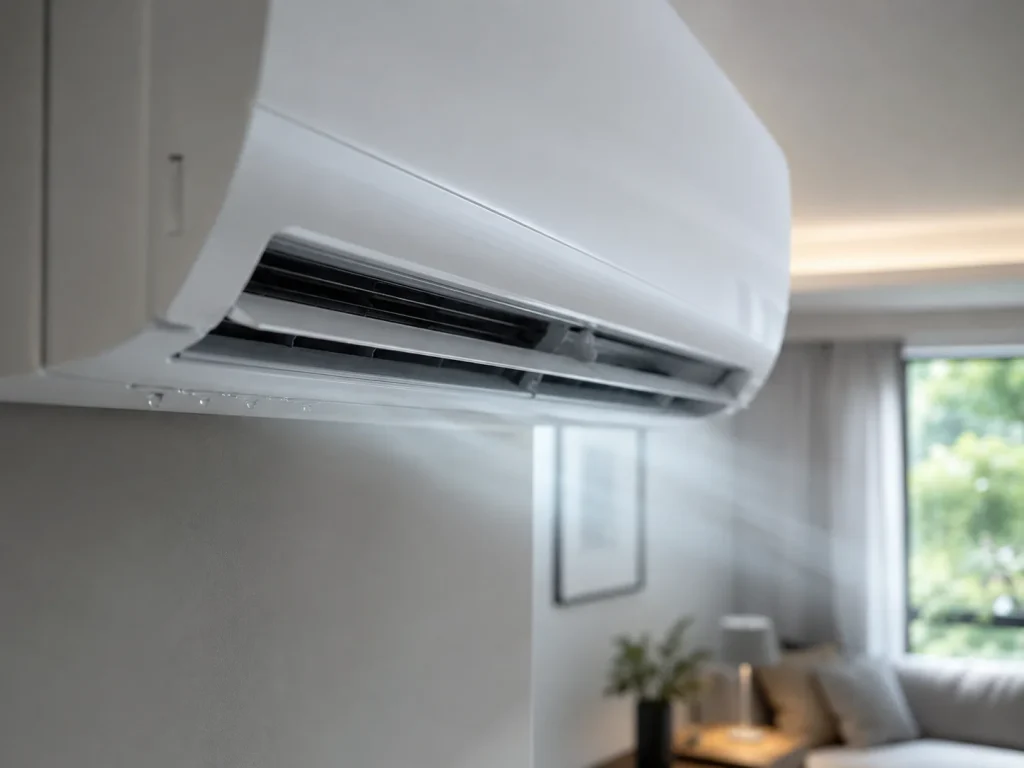
During cooling mode, mini splits draw warm, humid air across cold evaporator coils. As air temperature drops below its dew point, water vapor condenses on the coil surfaces and drains away through the condensate line. This process removes substantial moisture—typically 1 to 3 pints per hour depending on conditions and unit capacity.
The refrigeration cycle that enables cooling inherently produces dehumidification. No additional components or special features are required for basic moisture removal. However, several manufacturers have developed enhanced capabilities specifically for humidity control.
Daikin mini split dehumidifier mode operates by running the system at reduced cooling capacity while maintaining airflow across the evaporator coils. This approach prioritizes moisture removal over temperature reduction, addressing situations where humidity remains problematic despite comfortable temperatures.
Similarly, Mitsubishi systems incorporate dry mode functionality that many users discover only after researching whether Mitsubishi mini splits dehumidify effectively. These modes cycle the compressor and fan independently to maximize condensation while minimizing temperature change.
| Feature | Standard Cooling Mode | Dedicated Dehumidifier Mode |
|---|---|---|
| Primary Function | Temperature reduction | Moisture removal |
| Compressor Operation | Continuous | Cycling |
| Fan Speed | Variable based on cooling demand | Reduced for longer coil contact |
| Energy Consumption | Standard | Typically 20-30% lower |
| Temperature Impact | Significant cooling | Minimal temperature change |
Seasonal Considerations and Limitations
A common inquiry concerns whether mini splits dehumidify in winter. The answer requires understanding the relationship between temperature and dehumidification. During heating mode, mini splits do not remove moisture—the process requires cold evaporator coils, which are absent during heat pump operation.
Winter humidity challenges in heating-dominated climates typically involve excessively dry air rather than excess moisture. However, in mild winter climates or during shoulder seasons, humidity can remain problematic. Running the system briefly in cooling or dry mode addresses these situations, though this approach may prove impractical during genuinely cold weather.
How long do mini splits dehumidify effectively depends on several variables: outdoor humidity levels, indoor moisture sources, system sizing, and operating mode. Continuous operation in cooling mode provides ongoing dehumidification, while dedicated dry mode cycles based on humidity sensor readings.
The best mini split for dehumidification incorporates variable-speed compressor technology, which maintains longer run cycles at reduced capacity. This approach maximizes moisture removal compared to single-speed units that cycle on and off more frequently.
Addressing Common Objections and Misconceptions
Discussions on platforms where users ask about mini splits dehumidifying on Reddit reveal persistent misconceptions. Some believe separate dehumidifiers always outperform integrated HVAC dehumidification. While standalone units offer dedicated functionality, modern mini splits with dry mode provide comparable performance for typical residential applications.
“Mini splits cannot adequately control humidity”
This misconception often stems from improperly sized systems. Oversized units cool spaces quickly but cycle off before achieving meaningful dehumidification. Proper sizing calculations must account for both sensible (temperature) and latent (humidity) loads.
“Dehumidifier mode wastes energy”
Dedicated dry mode actually consumes less energy than standard cooling while addressing humidity specifically. The reduced compressor speed and fan operation translate to lower electrical consumption while targeting moisture removal.
“I need a separate dehumidifier anyway”
For most residential applications, properly operated mini splits provide sufficient dehumidification. Supplemental dehumidifiers benefit specific situations: basement moisture issues, exceptionally humid climates, or spaces with significant internal moisture sources like indoor pools.
What are the disadvantages of a mini split regarding dehumidification?
Limitations exist. Mini splits cannot dehumidify during heating operation. Extremely humid conditions may exceed single-unit capacity. Additionally, dehumidification effectiveness decreases as outdoor temperatures drop, even in cooling mode.
| Scenario | Mini Split Alone | Supplemental Dehumidifier Recommended |
|---|---|---|
| Typical residential cooling | ✓ Sufficient | Not necessary |
| Basement moisture control | Limited effectiveness | ✓ Recommended |
| Coastal high-humidity climate | May be insufficient | ✓ Recommended |
| Indoor pool or spa area | Inadequate | ✓ Required |
| Mild weather humidity | ✓ Dry mode effective | Not necessary |
Optimizing Your System for Humidity Control
Can you use a mini split as a dehumidifier? Effectively, yes—with proper operation. Activating dry mode or dehumidifier mode on compatible systems provides dedicated moisture control. For systems without this feature, running in cooling mode at slightly lower temperatures increases dehumidification at the cost of additional cooling.
Maintain clean filters to ensure adequate airflow across evaporator coils. Restricted airflow reduces both cooling capacity and dehumidification effectiveness. Most manufacturers recommend filter cleaning every two to four weeks during heavy use periods.
Verify condensate drainage regularly. Clogged drain lines prevent moisture removal and can cause water damage or system shutdown. Annual professional maintenance should include drain line inspection and cleaning.
Taking Control of Indoor Humidity
Understanding mini split dehumidification capabilities enables informed decisions about indoor air quality management. These systems provide meaningful moisture control during cooling operation, with enhanced capabilities available through dedicated dry modes on many models.
The recommended first step: locate the dry mode or dehumidifier function on your existing mini split remote or control panel. Consult the owner’s manual or manufacturer website for model-specific instructions. Running this mode during humid conditions—particularly when cooling demand is minimal—addresses moisture issues without unnecessary temperature reduction.
For new installations, discuss humidity concerns with your HVAC contractor during the sizing and selection process. Specifying a system with variable-speed technology and dedicated dehumidification mode ensures maximum flexibility in managing indoor moisture levels throughout the year.