Hybrid Water Heaters: How They Work and Why Homeowners Are Switching to Them
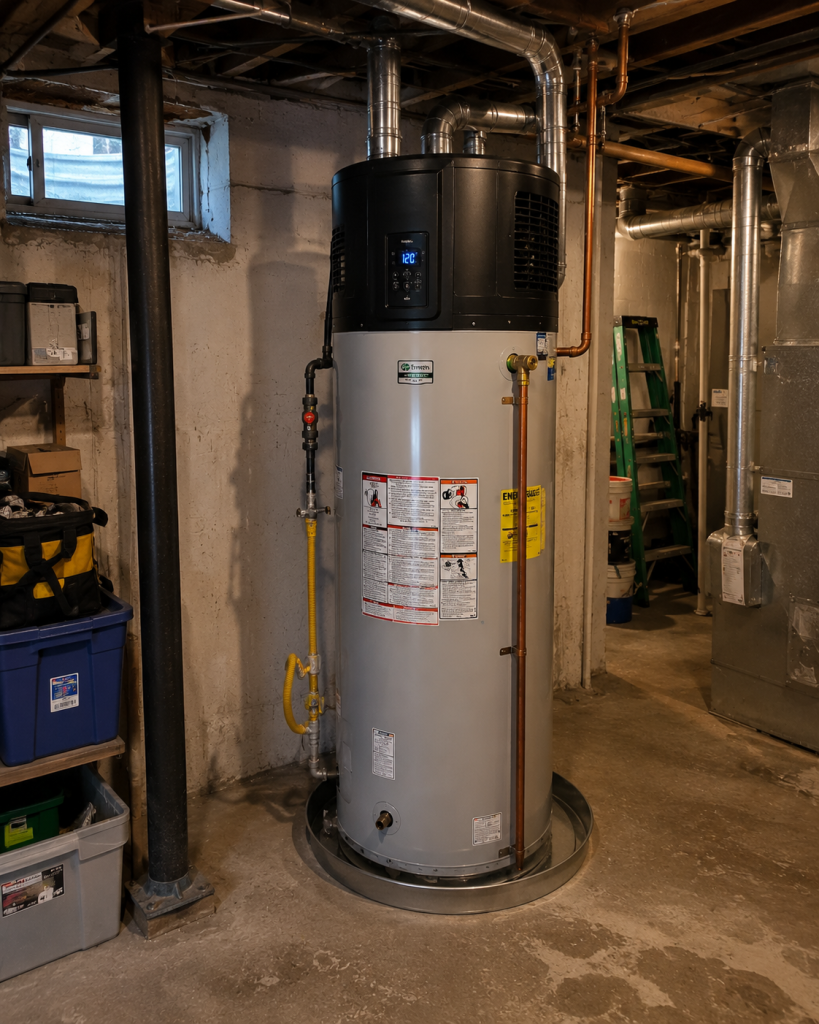
Most traditional electric water heaters work the same way: they generate heat directly through electric resistance elements inside the tank. Hybrid water heaters use a different approach.
A hybrid water heater — also called a heat pump water heater — pulls warmth from the surrounding air and transfers that heat into the water tank. Instead of constantly creating heat from electricity alone, the system moves existing thermal energy, which requires far less power.
That is why hybrid models are considered significantly more energy efficient than standard electric water heaters. In many homes, they can reduce electricity consumption for water heating by 60–70%.
The word “hybrid” refers to the fact that the system uses two heating methods:
- a heat pump for everyday high-efficiency operation
- traditional electric heating elements for periods of heavy hot water demand
When additional heating power is needed, the backup electric elements activate automatically.
How a Hybrid Water Heater Actually Works
The operating principle is very similar to an air conditioner or refrigerator — just reversed.
A refrigerator removes heat from inside the appliance and pushes it into the room. A hybrid water heater does the opposite: it takes warmth from the surrounding air and transfers it into stored water.
Because the system transfers heat instead of generating it directly, it uses much less electricity than a conventional electric tank.
Most residential units range between 50 and 80 gallons, with 50–65 gallon models being the most common for average households. Recovery speed depends on usage patterns and operating mode, but modern systems are designed to provide enough hot water for normal daily demand.
Why Homeowners Choose Hybrid Water Heaters
The biggest reason is operating cost.
Water heating is one of the largest energy expenses in many homes, and hybrid systems are designed specifically to reduce that long-term consumption. While the equipment itself costs more upfront, the lower electrical usage often offsets the higher purchase price over time.
Federal tax credits and utility rebates can also significantly reduce installation costs. Current federal incentives may cover up to 30% of the total installed price, including labor.
Another advantage is that hybrid systems remain fully electric. Homes without natural gas service can achieve high efficiency without installing gas lines or combustion venting.
Installation Requirements Matter
Hybrid water heaters are not installed exactly like conventional electric tanks.
Because the heat pump needs surrounding air to operate efficiently, the unit requires enough open air volume around it. Most manufacturers recommend approximately 750–1,000 cubic feet of space and sufficient vertical clearance for the heat pump assembly.
That is why basements and utility rooms are usually ideal locations, while small utility closets may not work without modifications.
Ambient temperature also affects efficiency. Hybrid systems perform best in spaces that remain between roughly 40°F and 90°F year-round.
An additional side effect of operation is mild cooling and dehumidification of the surrounding air, which many homeowners actually find beneficial in basements or humid utility spaces.
Hybrid Water Heater vs Traditional Electric
Compared to a standard electric water heater, a hybrid system:
- uses significantly less electricity
- costs more upfront
- requires more installation space
- produces modest operational noise similar to a refrigerator
For homeowners planning to stay in the property long-term, the reduced operating costs are usually the main reason to upgrade.
Are There Downsides?
Hybrid water heaters are not perfect for every property.
The main limitations are usually installation-related rather than operational:
- higher initial equipment cost
- space and clearance requirements
- reduced efficiency in very cold environments
- slower recovery in heat-pump-only mode during unusually heavy demand
However, in homes with proper installation conditions, these systems generally perform reliably and efficiently for many years.
Final Thoughts
Hybrid water heaters are becoming increasingly popular because they offer a practical middle ground between traditional storage tanks and more complex high-efficiency systems.
They still provide familiar tank-style hot water storage, but with dramatically improved energy efficiency and lower long-term operating costs.
For homeowners replacing an aging electric water heater, a hybrid model is often worth considering — especially when installation space, climate conditions, and available rebates align properly.