HVAC Zone Control Systems
Many homeowners operate their air conditioning systems under a fundamental misconception: that cooling an entire house uniformly represents efficient climate control. In reality, this approach often results in significant energy waste, uncomfortable temperature variations between rooms, and unnecessarily high utility bills. A zone control system for AC addresses these issues by dividing a home into independent climate zones, each with dedicated temperature management.
The Problem with Single-Zone Cooling Systems
Traditional HVAC configurations treat an entire residence as a single thermal unit. The thermostat reads the temperature in one location and cycles the system accordingly—regardless of conditions in other areas. This creates predictable problems.
Rooms with southern exposure receive substantially more solar heat gain than north-facing spaces. Upper floors accumulate rising warm air while basements remain cooler. Unoccupied guest rooms receive the same conditioning as high-traffic living areas. The result is a system working against physics rather than with it.
According to energy efficiency research from the Department of Energy, heating and cooling account for approximately 43% of residential energy consumption. When systems operate inefficiently—cooling empty rooms or fighting temperature stratification—that percentage climbs higher without delivering proportional comfort benefits.
Consequences of Inefficient Climate Control
The financial impact of single-zone inefficiency compounds over time. Homeowners typically compensate for uncomfortable rooms by lowering thermostat settings, which forces the entire system to work harder. This increases equipment wear, shortens system lifespan, and elevates monthly energy costs.
Beyond economics, comfort disparities create ongoing household friction. Family members in warmer areas of the home adjust settings that then overcool other zones. The thermostat becomes a point of constant negotiation rather than a set-and-forget convenience.
Equipment degradation represents another significant concern. Systems cycling more frequently to maintain uniform temperatures experience accelerated component wear. Compressors, blower motors, and contactors fail earlier than their rated lifespans would suggest, leading to premature zone board HVAC replacement costs and unexpected service calls.
| Issue | Single-Zone System | Zoned System |
|---|---|---|
| Energy efficiency | Conditions entire home regardless of occupancy | Targets only occupied zones |
| Temperature consistency | Varies significantly between rooms | Maintains independent zone settings |
| Equipment wear | Higher cycling frequency | Reduced cycling, extended lifespan |
| Utility costs | Higher baseline consumption | 20-30% potential reduction |
Understanding Zone Control System Components
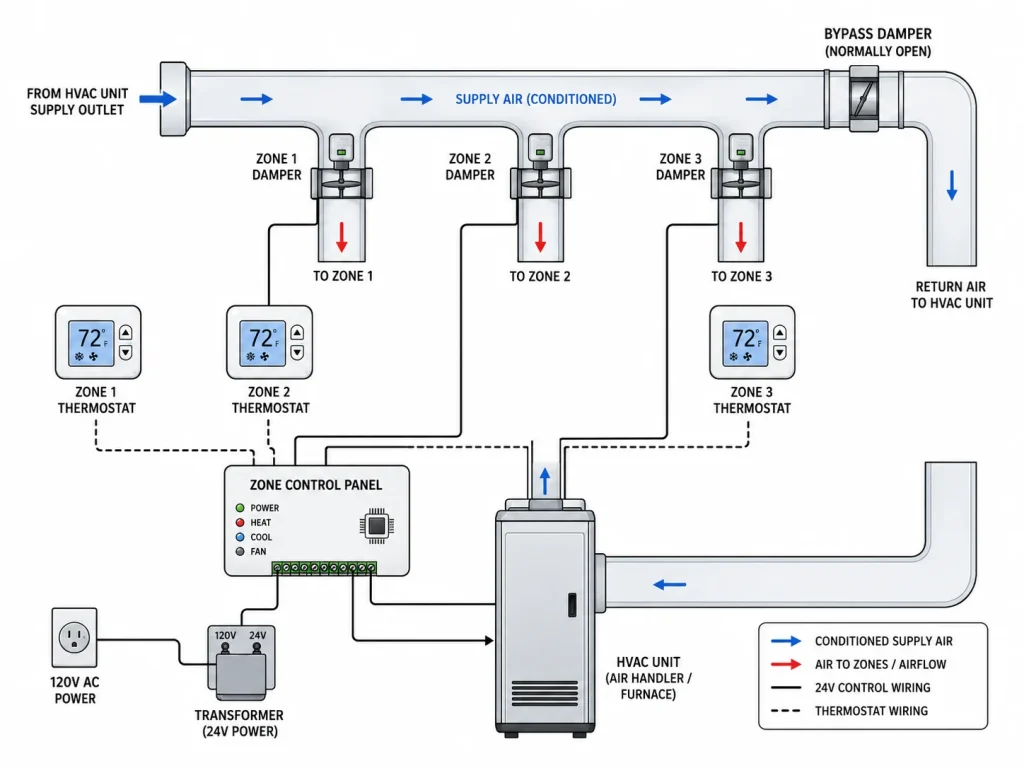
A zone control system for AC consists of several integrated components working together to deliver independent climate management. Understanding these elements helps homeowners evaluate system options and anticipate maintenance requirements.
Zone Dampers: Motorized dampers installed within ductwork open and close to direct conditioned air to specific areas. These dampers respond to signals from the zone control panel, restricting or permitting airflow based on each zone’s temperature requirements.
Zone Control Panel: The central hub that coordinates communication between thermostats, dampers, and the HVAC equipment. The HVAC zone control board processes temperature readings from each zone and determines which dampers should open while signaling the main system to operate.
Zone Thermostats: Each independent zone requires its own thermostat. These devices monitor local temperature conditions and communicate with the zone control panel to request heating or cooling when setpoints are not met.
Bypass Damper: When only one zone calls for conditioning, excess airflow must be managed to prevent pressure buildup in the ductwork. Bypass dampers redirect this excess air, protecting the system from static pressure damage.
The best HVAC zone control system configurations match component quality to the specific demands of the installation. Homes with complex ductwork layouts or extreme temperature differentials between zones require more sophisticated zone damper control board capabilities.
Addressing Common Objections
Several misconceptions prevent homeowners from pursuing zoning solutions that would benefit their situations.
“My home is too small for zoning.” Even modest residences often contain significant temperature variations. Two-story homes, split-level designs, and houses with finished basements frequently experience 5-10 degree differences between areas. Zoning addresses these disparities regardless of total square footage.
“Installation seems too disruptive.” Modern zoning components integrate with existing ductwork through minimally invasive procedures. Most installations complete within one to two days, with the majority of work occurring in unconditioned spaces like attics or basements.
“The technology is too complicated.” Contemporary zone control systems feature intuitive interfaces and smartphone integration. Programming multiple zones requires no more technical knowledge than operating a standard programmable thermostat. Many systems include smart home compatibility, enabling voice control and automated scheduling.
“My existing system cannot support zoning.” While some older systems require modifications, the majority of forced-air HVAC installations can accommodate zoning retrofits. A qualified technician can assess compatibility and recommend appropriate solutions.
Implementation Recommendations
Homeowners interested in zone control systems should begin with a professional load calculation and ductwork assessment. This evaluation identifies the optimal number of zones, appropriate damper sizing, and any modifications required for successful implementation.
Selecting zones based on usage patterns maximizes efficiency gains. Common configurations separate sleeping areas from living spaces, isolate home offices for independent scheduling, and address known problem areas with extreme temperature variations.
Evaluate your current comfort situation objectively. Document temperature variations between rooms, note which areas consistently feel too warm or too cool, and track thermostat adjustment frequency. This information provides valuable context for professional consultations.
Schedule assessments with two or three qualified HVAC contractors experienced in zoning installations. Compare their recommendations, equipment selections, and warranty offerings before making a decision. The investment in proper zone control delivers returns through improved comfort, reduced energy consumption, and extended equipment lifespan.