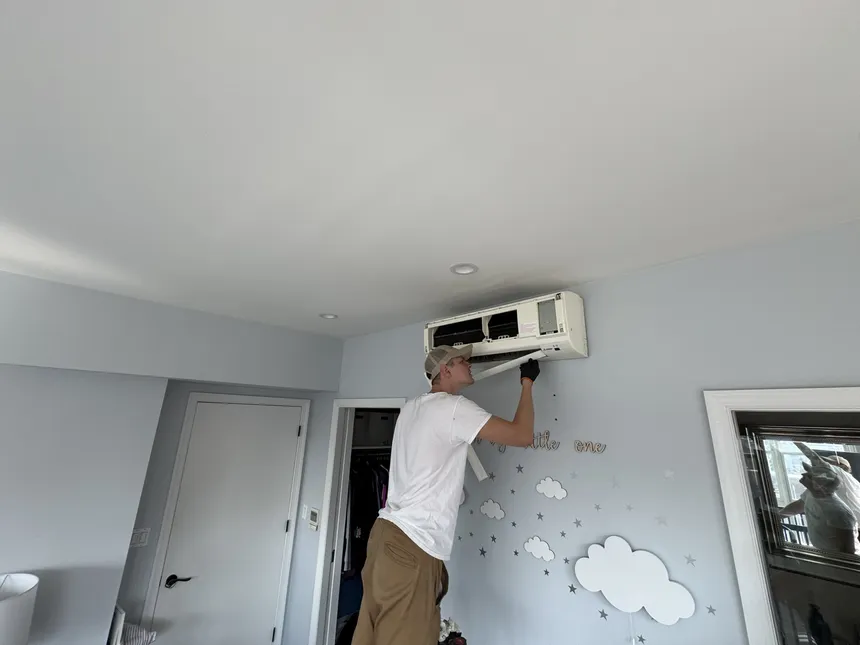
Can a replacement mini-split keep the refrigerant lines buried in the wall?
Reusing hidden copper can avoid opening finished rooms, but an undamaged-looking pair of pipe ends tells you little about the concealed run. Reuse needs support from the proposed equipment’s installation requirements and a technician’s assessment of the existing piping.
List what can be confirmed before demolition
Ask for the new indoor and outdoor models, required line sizes, permitted lengths and vertical separation. Compare those requirements with the known route. Record what is measured, what comes from a drawing, and what is unknown. Note any history of leaks, previous compressor failure, hidden joints or damaged insulation. Different systems can have different requirements even when the visible pipes look similar.
Set a decision point in the quote
Ask who will verify the route, condition and manufacturer acceptance, and at what point the installer must pause for approval if it cannot be reused. Require an alternative scope for routing new lines, including access to common areas and responsibility for patching finishes. The Building America ductless installation guide describes the importance of correct refrigerant piping and installation practices.
Do not open connections to identify the refrigerant or test a line yourself. For a ductless replacement assessment, send both model numbers, available drawings and photos of accessible endpoints. A conditional quote can then name the unresolved item instead of hiding it in a general allowance.