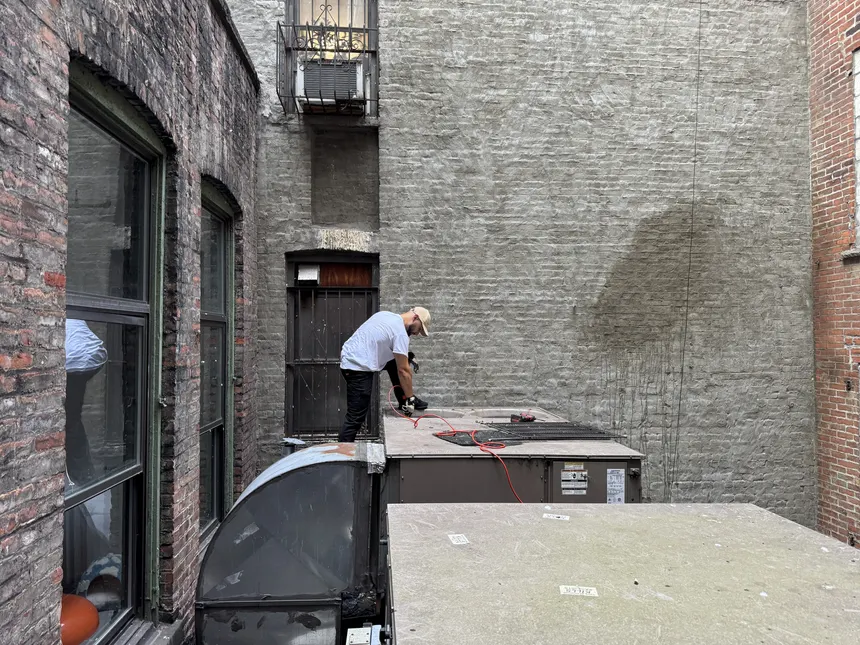
What can you do when heat pump runoff freezes on a walkway?
A heat pump can heat normally and still discharge defrost water in the wrong place for a New York winter. A dry-looking installation in summer can create ice on a shared entrance or an accessible route once temperatures fall. The first task is to protect people using that route and notify the building.
Document where the water actually goes
From a safe location, record the base of the outdoor unit, the slope below it and the first point where ice forms. Include roof drainage or downspouts nearby so the installer can distinguish sources. Note whether ice develops after normal defrost cycles, after rain, or during snowmelt. Do not reach underneath a running unit or enter a roof area without authorized access.
Ask for a winter drainage detail
For a correction or proposed replacement, request a drawing that shows equipment elevation, drainage and service clearance. The path must work under freezing conditions and must not create a new hazard at the next doorway or property line. A small improvised drain tube can freeze and back up water. The exact accessory and support arrangement should come from the model instructions and site design.
The Building America heat pump installation guide covers outdoor placement in cold climates. Attach the marked photos to a ductless installation assessment so the drainage path is included in the scope.