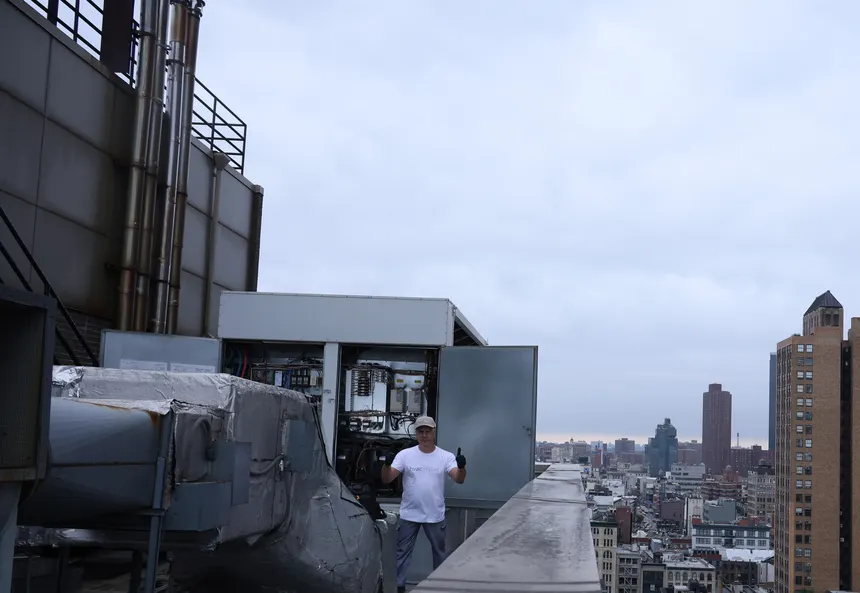
Was that recommended HVAC repair ever completed?
A service invoice can be paid while a defect listed on it remains open. Look at the verbs: “found,” “recommended,” “approved” and “replaced” describe different events. If a rooftop fan was noisy on the spring visit, the invoice for that visit alone cannot tell the fall manager what happened to the fan.
Build one chain for the decision
Start with the equipment tag, original observation, date and work-order number. Link the quote and the person responsible for the decision. If work is deferred, keep the reason, an owner and a review date. “Monitor” is usable only if someone knows what to observe and where to record a change. A tenant email acknowledging the report is useful background but is not proof that the repair was done.
Agree on what closes the item
Match the completion record to the same unit and component. Ask what the technician observed after the work: a stable run, restored airflow at the affected space or another result appropriate to the defect. Avoid turning an open item into a new duplicate each time a different shift reports it.
The US Department of Energy maintenance guide describes work-order history as a management tool. For a building HVAC follow-up, provide the original recommendation and the last dated action. That gives the visit a concrete question to resolve.