The Complete Guide to Your AC Unit’s Fan:
Everything You Need to Know
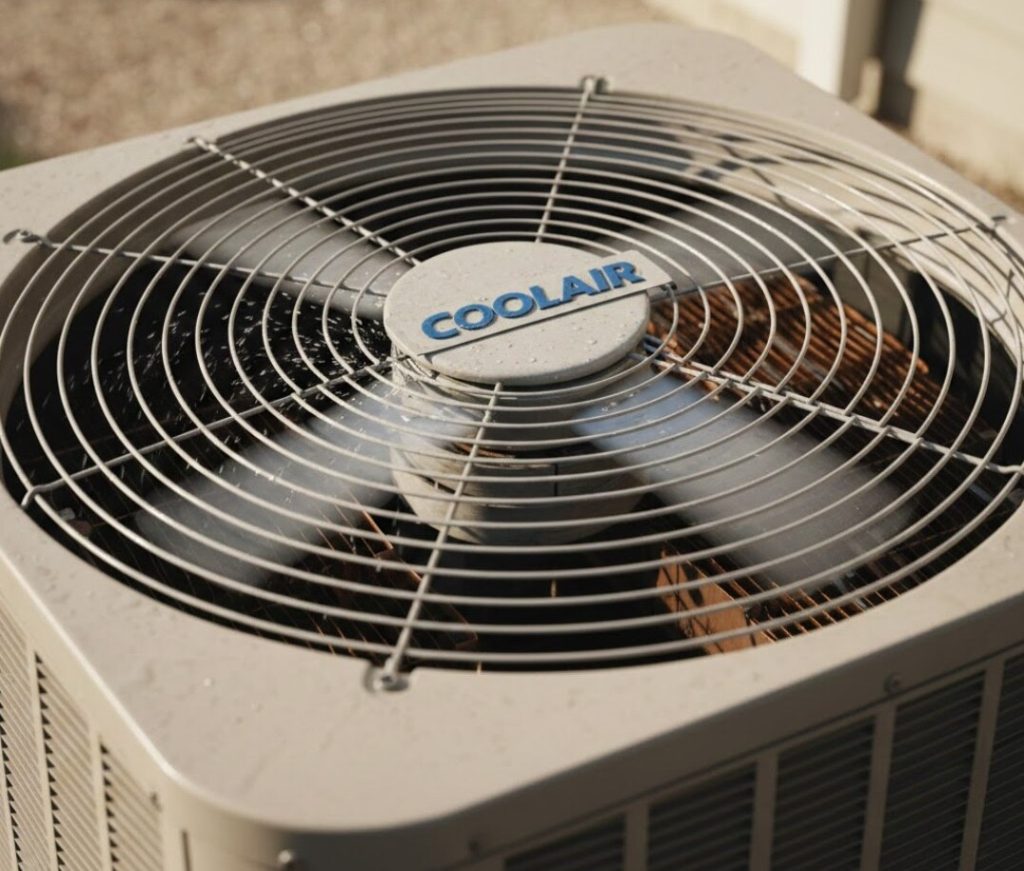
Your air conditioner is working overtime in the sweltering New York summers, but have you ever stopped to consider the unsung hero of your cooling system? That’s right—we’re talking about the fan in your AC unit. It’s the workhorse that keeps air circulating, your energy bills (hopefully) in check, and your apartment from feeling like a sauna. Let’s dive into everything you need to know about this critical component, from troubleshooting malfunctions to maximizing efficiency.
What Does the Fan in Your AC Unit Actually Do?
Think of the AC fan as the respiratory system of your cooling setup. While the compressor and refrigerant handle the heavy lifting of temperature reduction, the fan circulates that gloriously cool air throughout your space. In a typical split system, you’ve got two fans working in tandem: the indoor blower fan that distributes conditioned air through your vents, and the outdoor condenser fan that expels heat from the refrigerant cycle.
Without proper fan operation, your AC unit is essentially a very expensive paperweight. The fan ensures consistent airflow, prevents ice buildup on coils, and maintains the delicate balance required for optimal cooling performance.
When Should You Actually Use Fan Mode?
Short answer: absolutely not. Running your AC unit with a malfunctioning fan is like trying to drive a car with three wheels—technically possible but guaranteed to cause catastrophic damage. Without proper airflow, the evaporator coils will freeze, the compressor will overheat, and you’re looking at a repair bill that’ll make you wince.
Common signs your AC fan is struggling include:
- Weak airflow from vents despite the unit running
- Ice forming on refrigerant lines or coils
- Unusual grinding, squealing, or clicking sounds
- The outdoor unit running while indoor air remains stagnant
How to Fix a Malfunctioning AC Fan
Before calling a technician (and dropping $150-300 just for the service call in NYC), try these troubleshooting steps:
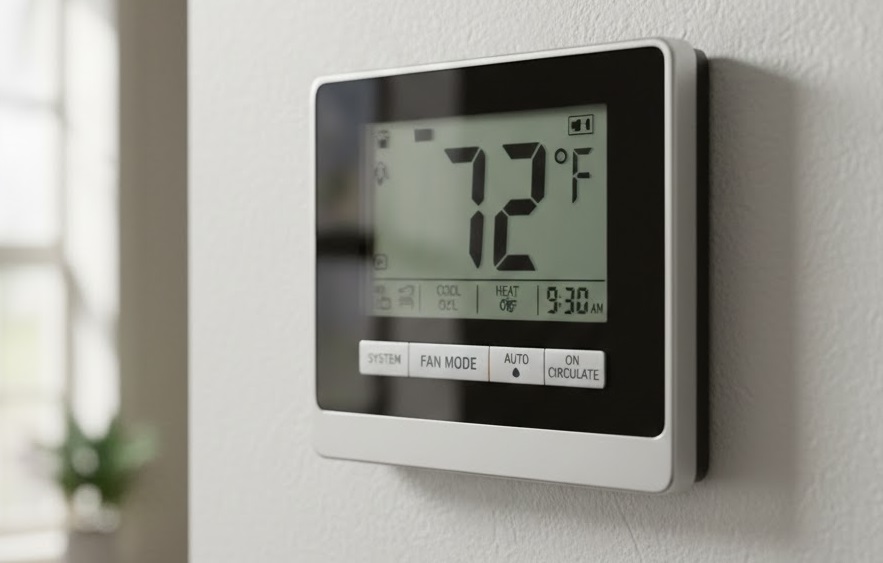
1. Check the thermostat settings – Ensure it’s set to “Auto” or “On” for fan operation
2. Inspect the air filter – A clogged filter restricts airflow; replace every 1-3 months
3. Examine the circuit breaker – A tripped breaker might have cut power to the fan motor
4. Look for visible obstructions – Debris around the outdoor condenser can jam the fan blade
If these don’t resolve the issue, you’re likely dealing with a capacitor failure, motor burnout, or control board problem—all requiring professional intervention.
AC Fan Replacement Costs in New York
| Component | Labor + Parts Cost | Time Required |
| Indoor Blower Motor | $450-$800 | 2-4 hours |
| Outdoor Condenser Fan Motor | $350-$650 | 1.5-3 hours |
| Capacitor Replacement | $150-$300 | 30-60 minutes |
| Fan Blade | $75-$200 | 1 hour |
These prices can spike during peak summer months when HVAC companies are slammed with service calls. Smart homeowners schedule maintenance in spring or fall when rates are more competitive.
Does Fan Mode Bring in Outside Air?
This is perhaps the most common misconception about AC units. In typical residential systems, fan mode recirculates indoor air only—it doesn’t draw fresh air from outside. Your AC is a closed-loop system designed to cool existing indoor air, not ventilate your space with outdoor air.
The exception? Some higher-end HVAC systems feature dedicated outside air intakes with dampers, but these are relatively uncommon in standard New York apartment installations. For fresh air ventilation, you will need to crack a window or invest in an energy recovery ventilator (ERV).
What About That Fan That Keeps Running After Shutdown?
If your AC fan continues running after you’ve turned off the system, you’ve got one of three scenarios:
1. Thermostat set to “On” instead of “Auto” – This keeps the fan running continuously regardless of cooling cycles
2. Faulty relay or control board – Electrical components aren’t receiving the shutdown signal
3. Designed delay feature – Some modern units run the fan 1-2 minutes after cooling stops to clear condensation
The first is a simple fix; the latter two require professional diagnosis.
Maximizing Fan Efficiency: Pro Tips
Want to squeeze every ounce of performance from your AC fan? Here’s the playbook:
- Clean or replace filters monthly during heavy use – Dirty filters force the fan to work harder
- Keep vents unobstructed – That bookshelf blocking your return vent is killing efficiency
- Schedule annual professional maintenance – Technicians lubricate motors and check electrical connections
- Consider a programmable thermostat – Models from Nest ($129) or Ecobee ($179) optimize fan runtime based on occupancy
- Use ceiling fans in conjunction – This allows you to raise the thermostat 4°F without sacrificing comfort, reducing compressor runtime
The Bottom Line
Your AC unit’s fan isn’t glamorous, but it’s absolutely essential to keeping your New York home comfortable through brutal summer heat waves. Understanding when to use fan mode, recognizing warning signs of malfunction, and maintaining the system properly can extend equipment life by years and save hundreds on energy costs annually.
When in doubt, don’t hesitate to consult with certified HVAC professionals who can assess your specific system. After all, a well-maintained AC fan is the difference between sleeping comfortably in July and melting into your mattress at 3 AM.
Ready to optimize your cooling system? Start by checking that air filter right now—we’ll wait. Your AC fan (and your electricity bill) will thank you.